
Industry professionals involved in the day-to-day grind of running a factory, plant, or any other heavy-duty operation need to choose components carefully. These components are, after all, the backbone of their entire system. From transferring volatile chemicals to managing extreme pressures, the margin of error has to be zero. That is where stainless steel seamless tubes come in, designed originally for heavy industries.
But what makes them the gold standard for so many heavy applications? Here, we will uncover everything related to these tubes.
What do we know of stainless seamless tubes?
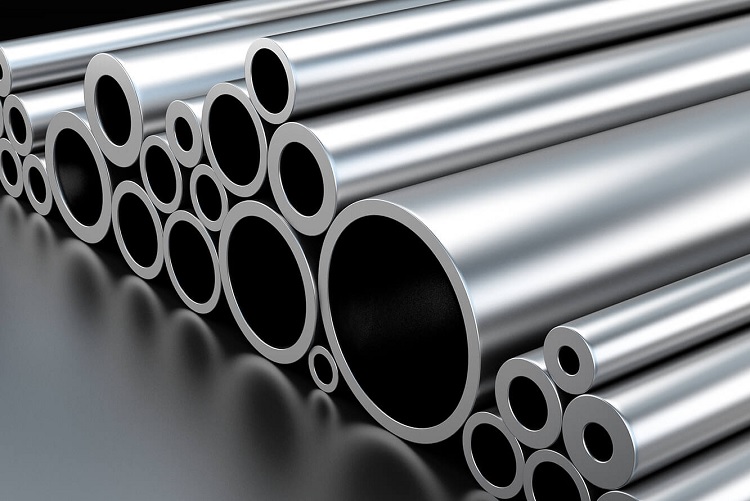
Think of this product as a wielded tube or more like a piece of paper swayed into a tube and fastened along the edge. Stainless steel seamless tubes are like a piece of clay concaved out from the center, making a continuous and even structure.
Why does the lack of a seam matter so much?
- The seam in a welded tube is a possible point of failure
- Under persistent cycles of high pressure, the weld becomes weak
- Temperature fluctuations and corrosive attacks damage the structure
- Stainless steel seamless pipes get rid of this vulnerability totally
How are seamless tubes different from welded tubes?
- Welded tubes – Begin as a flat sheet of stainless steel, rolled into a cylindrical outline, and then welded the open seam inside and out.
- Seamless tubes – Start as a solid, cylindrical billet of stainless steel, and the heated billet is pierced via the center with a mandrel, producing a hollow out from the middle, producing one constant, consistent structure.
How are stainless steel seamless tubes are created?
Understand the manufacturing procedure to help you appreciate the value you are about to receive. The most common technique for producing industrial-grade stainless steel seamless pipes & tubes is the unique penetrating procedure.
Here is a complete breakdown –
- Preparation of billet – A strong, high-quality stainless steel billet selected and heated to a clear-cut, high temperature to make it flexible.
- Piercing – The heated billet pushed into a rotary penetrating mill. Two big, barrel-shaped rolls, fixed at an angle, grip and rotate the billet. This action produces high stress at the middle, creating a stationary piercer point to create a hole via the billet’s length.
- Elongation and sizing – The rough, hollow shell then procured via other mills. A plug mill or mandrel mill widens and thins the walls to the preferred diameter and width.
- Finishing – Newly produced stainless steel Seamless tubes scratched to length; heat treated to reinstate their metallurgical properties, selected to remove scale, and polished to the required surface finish.
This thorough procedure creates a product with superior, uniform strength throughout the structure.
Why do heavy-duty applications demand seamless tubes?
Why do industry experts care about stainless steel Seamless tubes? The benefits of stainless steel tubes and pipes translate into enhanced safety, effectiveness, and cost savings.
What are the main benefits of seamless tubes?
- Greater pressure integrity – Without a weld seam, the tube has consistent strength around its whole circumference. Making stainless steel Seamless tubes inherently stronger and more dependable for having high internal pressures, a non-negotiable need in power creation and oil & gas.
- Improved corrosion resistance – The weld zone in welded tubes can sometimes have a different metallurgical structure, making stainless steel seamless pipes more vulnerable to corrosion. The homogenous shape of a seamless tube provides reliable corrosion resistance from all angles.
- Consistency in shape and wall thickness – The penetrating and elongating procedure enables outstanding control over the tube’s dimensions. This results in a perfect concentric tube with consistent wall thickness, which is essential for maintaining effortless fluid flow and structural integrity.
- High temperature adds strength – Steel seamless tubes manage their structural integrity and creep strength under intense heat, making them a great choice for boilers, heat exchangers, and superheaters.
- Robustness and long service life – The mixture of all these factors makes stainless steel Seamless tubes more durable and allows them to last longer in harsh environments, lowering downtime, maintenance charges, and the occurrence of replacements.
Stainless steel seamless tubes are important in which industries
You can find stainless steel Seamless tubes in action at different industries, even in the most demanding sectors. Here are a few –
- Oil and gas industry – Here, seamless pipes and tubes tolerate absolute abuse, high pressure, and corrosive environments, especially during the downhole drilling to the refinery pipelines. Additionally, they can handle the extreme pressure of the deep wells and are resistant to H2S and CO2 corrosion.
- Chemical and prophylactic processing – With the help of these pipes and tubes, some plants handle acids, solvents, and other aggressive chemicals, preventing decay.
- Power generation – Both fossil fuel plants and next-generation nuclear facilities require seamless tubes to manage steam and water at high temperatures and pressures.
- Fertilizer manufacturing facility – The manufacturing of fertilizers, such as highly corrosive intermediates like ammonium carbonate, produces heat in the processing lines, and seamless pipes can withstand it.
Frequently asked questions
Q: Is it possible to bend and fabricate seamless tubes similarly to welded tubes?
A: Yes, without a doubt. Because of their high ductility, seamless stainless steel tubes can be significantly bent, flared, and fabricated.
Q: Are large diameters of seamless tubes available?
A: Seamless tubes work best at small to moderate diameters (from 1/8″ NB to about 24″ OD), but at very large sizes, their production becomes more difficult and costly.
Q: What distinguishes “tube” from “pipe”?
A: Although the terms are frequently used interchangeably, there is a technical difference. Pipes are used to transport gases and fluids and are usually specified by an interval (wall thickness) and Nominal Pipe Size (NPS).
Q: What effect does a seamless tube’s surface finish have on performance?
A: In fluid systems, friction and pressure drop are decreased by a refined internal surface finish, which is often determined by Ra (Roughness Average).
Q: Why should I buy my seamless tubes from a specialist producer?
A: A specialist manufacturer, such as Sunmark Stainless, has the expertise and regulated procedures to guarantee constant quality.


