
At the farthest edge of the planet lies a frozen wilderness that few humans ever experience firsthand. Antarctica, vast and unforgiving, is not only a place of breathtaking beauty but also one of the most critical frontlines in the fight against climate change. Through Antarctica expedition photography, journalists and visual storytellers bring this distant world closer to us, revealing both its fragile ecosystems and the urgent transformations taking place beneath its icy surface.
This article explores how modern expeditions combine science, journalism, and cutting-edge photography to document one of the most important environmental stories of our time.
The Purpose Behind Antarctica Expedition Photography
Why Antarctica Matters
Antarctica holds nearly 70% of the world’s fresh water in its ice sheets. Any significant melting has direct consequences for global sea levels. Scientists travel here to study glaciers, ice cores, and ocean patterns, while journalists document these findings for the world.
Antarctica expedition photography plays a vital role in translating complex scientific data into powerful visuals that resonate with a global audience. A single image of a collapsing glacier or a fractured ice shelf can communicate urgency more effectively than pages of statistics.
Life on an Icebreaker Expedition
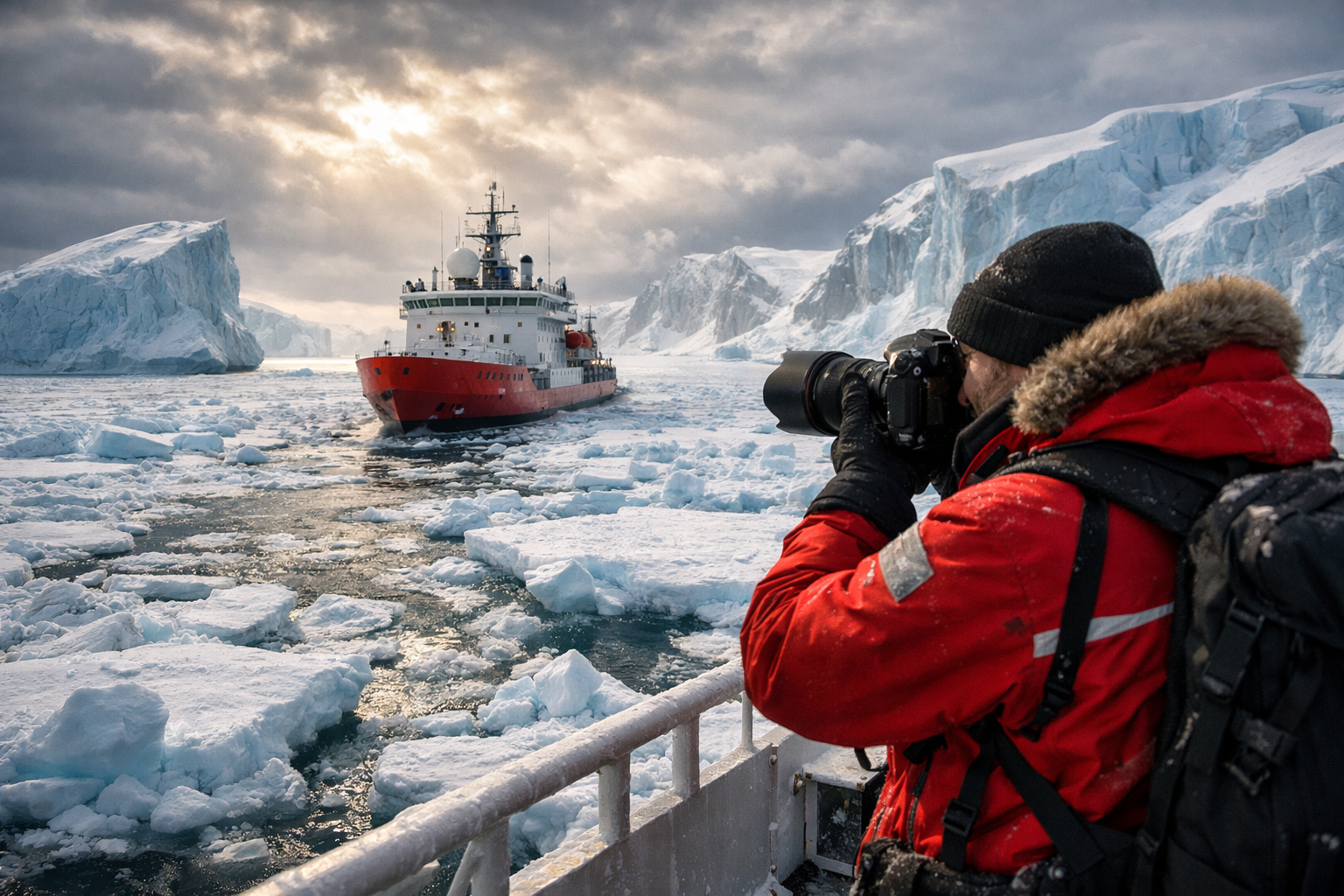
Traveling to Antarctica is not a simple journey. Most expeditions begin aboard specialized icebreaker ships designed to cut through thick sea ice. These vessels serve as floating laboratories and living quarters for scientists, journalists, and photographers.
Days are structured around:
- Scientific observations
- Weather monitoring
- Field excursions onto ice sheets
- Data collection and documentation
Conditions are harsh. Temperatures often drop below freezing, winds can be relentless, and the isolation is profound. Yet, it is within these extreme circumstances that Antarctica expedition photography thrives, capturing moments that few people on Earth will ever witness.
Tools and Techniques in Extreme Photography
Modern Innovations in Antarctica Expedition Photography
Photographers working in Antarctica rely on a mix of traditional and advanced tools to overcome environmental challenges.
Some of the most commonly used equipment includes:
- Drones for aerial perspectives of glaciers and icebergs
- Remote cameras placed in dangerous or inaccessible locations
- Weather-sealed DSLR and mirrorless cameras
- Action cameras for immersive angles
- Sound-triggered devices to capture rare natural events
Battery life becomes a major issue in freezing temperatures, often requiring photographers to keep spare batteries close to their bodies for warmth. Equipment must also be protected from moisture, ice buildup, and sudden weather changes.
These innovations have transformed Antarctica expedition photography, enabling more dynamic and comprehensive storytelling than ever before.
Challenges of Shooting in Polar Conditions
Photographing Antarctica is vastly different from shooting in more temperate environments. Every step presents unique obstacles.
Environmental Challenges
- Extreme cold affecting both humans and equipment
- High winds causing instability
- Blinding reflections from snow and ice
- Rapidly changing weather conditions
Physical and Mental Strain
Photographers often endure long hours in freezing conditions, carrying heavy gear across uneven terrain. The isolation can also take a psychological toll, as communication with the outside world is limited.
Despite these challenges, the reward lies in capturing once-in-a-lifetime visuals that contribute to a greater understanding of our planet.
The Role of Visual Storytelling in Climate Awareness
Climate change is often discussed in abstract terms—rising temperatures, carbon emissions, and statistical projections. However, visuals have the power to make these concepts tangible.
Through Antarctica expedition photography, audiences can:
- Witness the scale of melting glaciers
- Observe wildlife affected by environmental changes
- Understand the fragility of polar ecosystems
These images create an emotional connection, encouraging viewers to engage more deeply with environmental issues.
Collaboration Between Scientists and Photographers
One of the most fascinating aspects of Antarctic expeditions is the collaboration between scientists and journalists.
Scientists focus on:
- Collecting data
- Conducting experiments
- Analyzing environmental changes
Photographers and reporters, on the other hand, translate this work into compelling narratives. This partnership ensures that scientific discoveries reach a broader audience.
For example:
- A scientist may measure glacier retreat rates
- A photographer captures the visual evidence of that retreat
Together, they create a complete story—one grounded in data and amplified through imagery.
Moments That Define the Expedition
Some of the most powerful images captured during Antarctic missions come from unpredictable moments:
- A glacier cracking and collapsing into the sea
- Massive icebergs drifting silently
- Rare wildlife encounters
- Sudden storms sweeping across the landscape
These fleeting events require patience, preparation, and sometimes sheer luck. Photographers must always be ready to act, often within seconds.
Ethics and Responsibility in Polar Photography
Photographers working in Antarctica carry a significant responsibility. The environment is delicate, and human activity must be minimized.
Key ethical considerations include:
- Avoiding disturbance to wildlife
- Following strict environmental regulations
- Ensuring no damage to the ecosystem
- Accurately representing the reality of climate change
Responsible Antarctica expedition photography is not just about capturing beauty—it is about preserving truth and respecting the environment.
The Impact on Global Audiences
Images from Antarctica often appear in major publications, documentaries, and digital platforms. Their reach is immense.
These visuals:
- Influence public opinion
- Support environmental advocacy
- Inform policy discussions
- Inspire future research and exploration
For many people, these photographs provide their only glimpse into Antarctica, making their accuracy and impact even more important.
The Future of Antarctica Expedition Photography
As technology continues to evolve, the future of polar photography looks promising.
Emerging trends include:
- Advanced drone capabilities
- AI-enhanced image analysis
- Real-time data sharing from remote locations
- Virtual reality experiences for immersive storytelling
These advancements will further enhance how we document and understand Antarctica, making it more accessible to people around the world.
Conclusion
Antarctica remains one of the last true frontiers on Earth—a place of immense beauty, scientific importance, and growing environmental concern. Through Antarctica expedition photography, this remote continent is brought into focus, allowing the world to witness both its majesty and its vulnerability.
The work of photographers and journalists in these extreme conditions goes beyond storytelling. It serves as a bridge between science and society, transforming distant realities into urgent global conversations.
As climate change continues to reshape our planet, the images captured in Antarctica will remain vital—reminding us not only of what is at stake, but also of the responsibility we share in protecting it.